At some point in almost every move, the timing does not line up. You close on the sale before you close on the next house. A remodel runs three weeks long. A parent is downsizing and the family needs months, not days, to make decisions. In every one of these situations you need somewhere for your belongings to live for a while, and you have two very different options that are easy to confuse.
One is self-storage: you rent an empty unit, then pack, haul, and stack everything yourself, twice. The other is full-service moving and storage: a professional crew packs and inventories your belongings, transports them to a secure warehouse, keeps them there under one accountable roof, and delivers them back to your new home when you are ready. After more than fifty years of storing Los Angeles homes between moves, we have seen where each option genuinely fits and where the “cheaper” one quietly becomes the expensive one. This guide lays out both honestly.
Key takeaways
- Self-storage means you handle everything twice. Full-service means a professional crew packs, transports, stores, and redelivers, with one company accountable end to end.
- Full-service storage is almost always the better fit for a whole home, a home-sale gap, a renovation, staging, or a long-distance move with a holding period.
- The real cost of self-storage is rarely the monthly rent. It is the truck rental, the double handling, your own time and labor, and the higher risk of damage from moving everything yourself twice.
- Professional storage tracks every item by barcode inventory, so you know exactly what is in the warehouse and nothing goes missing between move-out and move-in.
- Temperature-controlled space is available for wood furniture, artwork, electronics, and other items that should not sit in a hot unit for months.
- The move-in / store / move-out cycle is a single coordinated job. Booking it as one avoids the seams where belongings usually get lost or damaged.
The two models, plainly explained
Self-storage and full-service storage both end with your belongings sitting in a facility for a period of time, which is why people assume they are interchangeable. They are not. The difference is who does the work, how your belongings are handled, and who is accountable if something goes wrong.
With self-storage, you rent an empty unit by the month. Everything else is on you: renting a truck, packing, loading, driving, unloading into the unit, and then repeating the entire process in reverse when you are ready. The facility rents you space and nothing more. They never touch your belongings and take no responsibility for them.
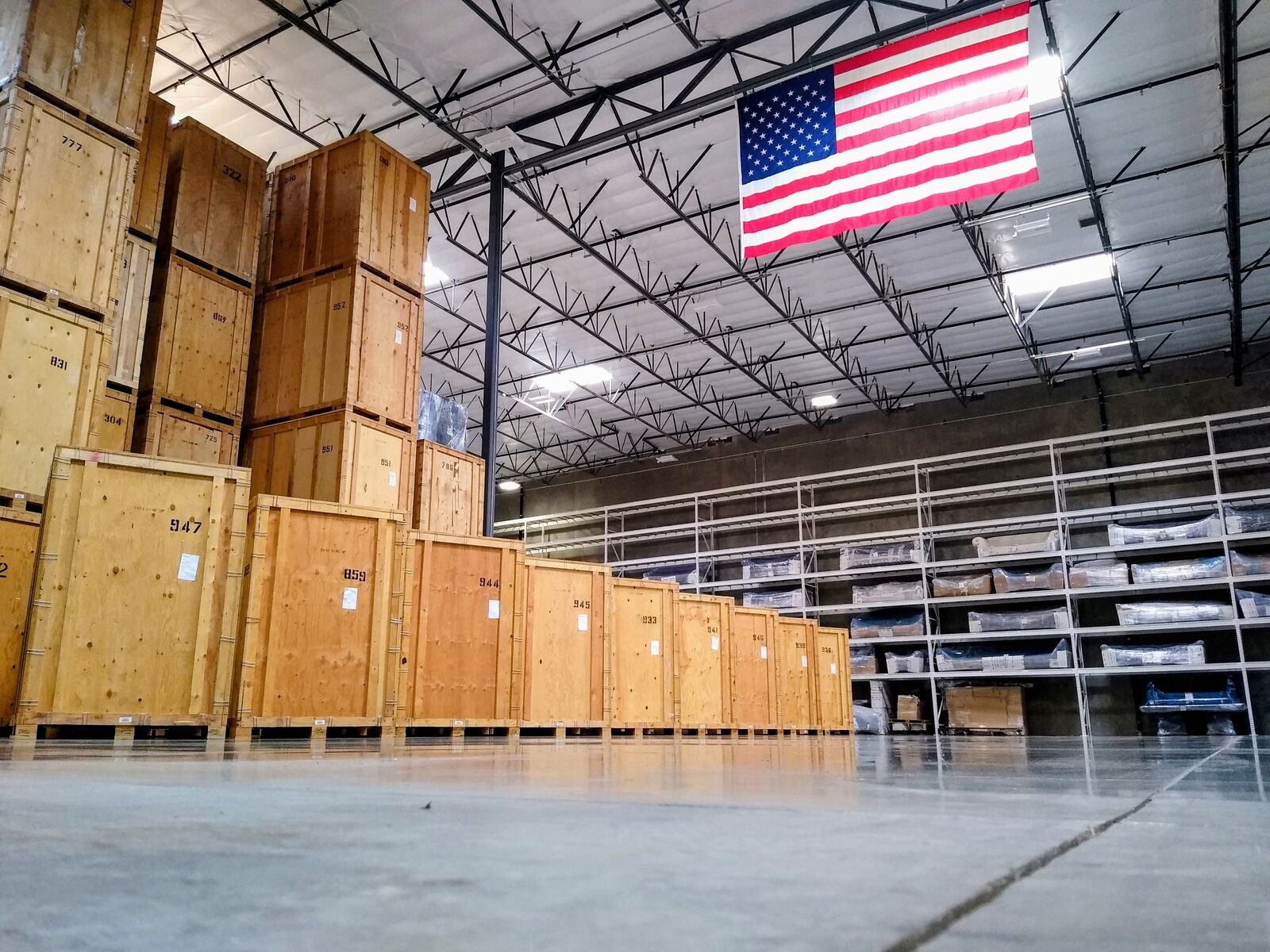
With full-service moving and storage, a professional crew packs and pads your belongings, inventories each item, and transports everything to a secure warehouse. Belongings are stored in dedicated wooden storage vaults rather than loose on an open floor. When your new home is ready, the same company delivers everything back and places it where it belongs. One team, one inventory, one point of accountability from the first box to the last.
The tell-tale question
Ask yourself: do I want to rent space, or do I want the whole problem handled? If you have a few boxes and a weekend to spare, self-storage is fine. If you are storing a household and your time and belongings matter, full-service is what you are actually looking for.
When full-service storage is the right call
Full-service moving and storage earns its keep in a handful of very common situations, the same ones that bring most of our storage clients to us in the first place.
- The gap between homes: you have sold and closed, but the new place is not ready. Your entire household needs to be professionally stored for days, weeks, or months and then delivered, not shuttled into a unit and back out by you.
- A renovation or remodel: furnishings need to leave the house so work can happen, then return once the dust literally settles. Storing with the same crew that moved everything out makes the return effortless.
- Staging a home for sale: your agent wants rooms cleared and depersonalized. We remove and store the excess, then bring it back after closing.
- Downsizing, especially for seniors: decisions about what to keep, gift, or sell take time. Storage gives the family breathing room instead of forcing rushed calls on move day.
- A long-distance or international move with a timing gap: belongings are held securely until the destination home (or the paperwork) is ready to receive them.
- An estate or inherited home: contents need to be inventoried and safely held while the family decides what happens next.
What these all share is scale and stakes. You are not stashing a bike and some seasonal boxes. You are entrusting a whole home. That is exactly where doing it yourself twice becomes a genuine risk, and where a single accountable company pays for itself.
How the move-in, store, move-out cycle works
The reason full-service storage protects your belongings so much better is that it treats the whole journey as one continuous, tracked job rather than three disconnected events. Here is the sequence.
- Assessment and estimate: we survey what needs to be stored, discuss how long, and give you a clear, written, no-obligation estimate before anything moves.
- Packing and protection: our crew pads and wraps furniture and packs boxes. Full or partial packing is available as an add-on if you would rather hand off the kitchen, closets, and fragile items entirely.
- Inventory: every item and carton is logged with barcode inventory as it is loaded, so there is a documented record of exactly what went into storage.
- Transport and vaulting: belongings travel to our secure Chatsworth warehouse and are stored in dedicated wooden vaults, kept off the floor, enclosed, and clearly numbered, not stacked loosely in a shared space.
- Secure holding: your belongings stay in a 24/7-monitored facility for as long as you need, with temperature-controlled space available for sensitive items.
- Redelivery: when your home is ready, the same company delivers everything back and places it in the right rooms, checking it against the inventory as it comes off the truck.
Because one company owns every step, nothing falls through the cracks between them. There is no moment where your belongings are handed from a truck-rental company to a storage clerk to a second mover, each with no record of what the last one did. That seamlessness is the entire point.
What it really costs beyond the monthly rent
On paper, a self-storage unit looks cheaper because you are comparing a monthly rent against a fuller service. But the rent is only one line in the real bill. To compare honestly, count everything self-storage quietly asks of you.
- Truck rental, fuel, and mileage, twice, since you load in and load out.
- Packing materials and equipment you buy and haul yourself.
- Your own time and physical labor across two full move days, plus the trips in between.
- The cost of damage: household goods moved by hand, twice, by people without professional equipment simply break more often.
- The risk of an uncontrolled unit: heat, humidity, and pests over months can ruin wood furniture, upholstery, electronics, and artwork.
Full-service storage folds the labor, transport, protection, and accountability into one price. What drives that price is straightforward: the volume of goods, how long they are stored, whether you add packing, how often you need access, and whether any items need temperature-controlled space or custom crating. Because those variables differ for every household, the only honest number is a real estimate, which is why ours are free and written down before any commitment.
Access matters: decide up front
Warehouse (vaulted) storage is more economical and more secure, but it is not designed for you to drop by weekly. If you expect to need frequent access to your belongings, tell us up front so we can plan for it. If you simply need everything held safely until move-in, vaulted storage is ideal.
How to choose a full-service storage provider
Not all storage is equal, and the details that matter are easy to miss until something goes wrong. If you are comparing companies, these are the questions worth asking.
- Is the company properly licensed and insured for both moving and storage? Ask for the license numbers and confirm what valuation coverage applies to your belongings while they are in the warehouse, not only during transit.
- How are belongings stored? In enclosed, numbered vaults, or loose on an open floor shared with others? Vaults keep your household separate, off the ground, and accountable.
- Is there a real inventory system? A barcode or itemized inventory is your proof of exactly what is being held and your protection against anything going missing.
- Is the facility monitored and secured around the clock? Ask how access is controlled and who can enter.
- Is temperature-controlled space available for sensitive items that will be stored for months?
- Will the same company handle the move out, the storage, and the move back? A single accountable provider is the whole advantage. Do not give it away by splitting the job.
A reputable company will answer all of these plainly and put the important ones in writing. Vagueness on licensing, insurance, or how your belongings are actually stored is a reason to keep looking.
Protecting belongings through a long stay
Storing for a weekend and storing for six months are different problems. Over a long stay, the enemies are not dropped boxes but slow, invisible forces: heat, humidity swings, dust, and pressure from poor stacking. Professional storage is built to counter them.
- Wood furniture, antiques, and musical instruments are vulnerable to humidity and heat over time. Temperature-controlled space is available for exactly these pieces.
- Artwork, photographs, and documents should never sit in an uncontrolled unit for months; they belong in protected, temperature-stable storage, and high-value pieces can be custom-crated first.
- Upholstery and mattresses are padded and covered so they arrive as they left, not musty or crushed.
- Everything is stored off the floor in vaults rather than stacked directly on concrete, which protects against moisture and pests.
This is the quiet advantage of storing with a mover who also runs the warehouse: the same judgment that decides how a fragile piece is packed also decides how it is stored. The protection is continuous from your old home to the vault and back to your new one.
The bottom line
Self-storage is a fine tool for a small amount of belongings when you have the time, the truck, and the muscle to handle it yourself. For a whole household (a home-sale gap, a remodel, a downsizing, or a long-distance move with a wait), full-service moving and storage is almost always the better decision. You trade a slightly higher sticker price for far less risk, none of the labor, and one company that is accountable from the first box to the last.
Stratton and Sons has stored Los Angeles homes this way for four generations, from our secure Chatsworth warehouse. If you are weighing your options for a move with a timing gap, we are glad to walk through what makes sense for your situation. No pressure, and the estimate is free.
How Stratton & Sons can help
The services behind everything in this guide — handled by our own crews and crating shop.
Storage Solutions
Secure, 24/7-monitored Chatsworth warehouse with vaulted storage, barcode inventory, and temperature-controlled space available.
Residential Moving
Full-service local moves with the option to store between homes, packed, transported, and redelivered by one crew.
Senior Downsizing
Patient, respectful downsizing with storage to give families time to make decisions without move-day pressure.
Estate Moving
Discreet handling and inventoried storage of full-estate contents, fine art, and heirlooms.
Moving art, antiques, or a full collection?
Talk to a fourth-generation Los Angeles fine-art mover about crating, transport, and storage for your pieces. Free, no-obligation estimates.