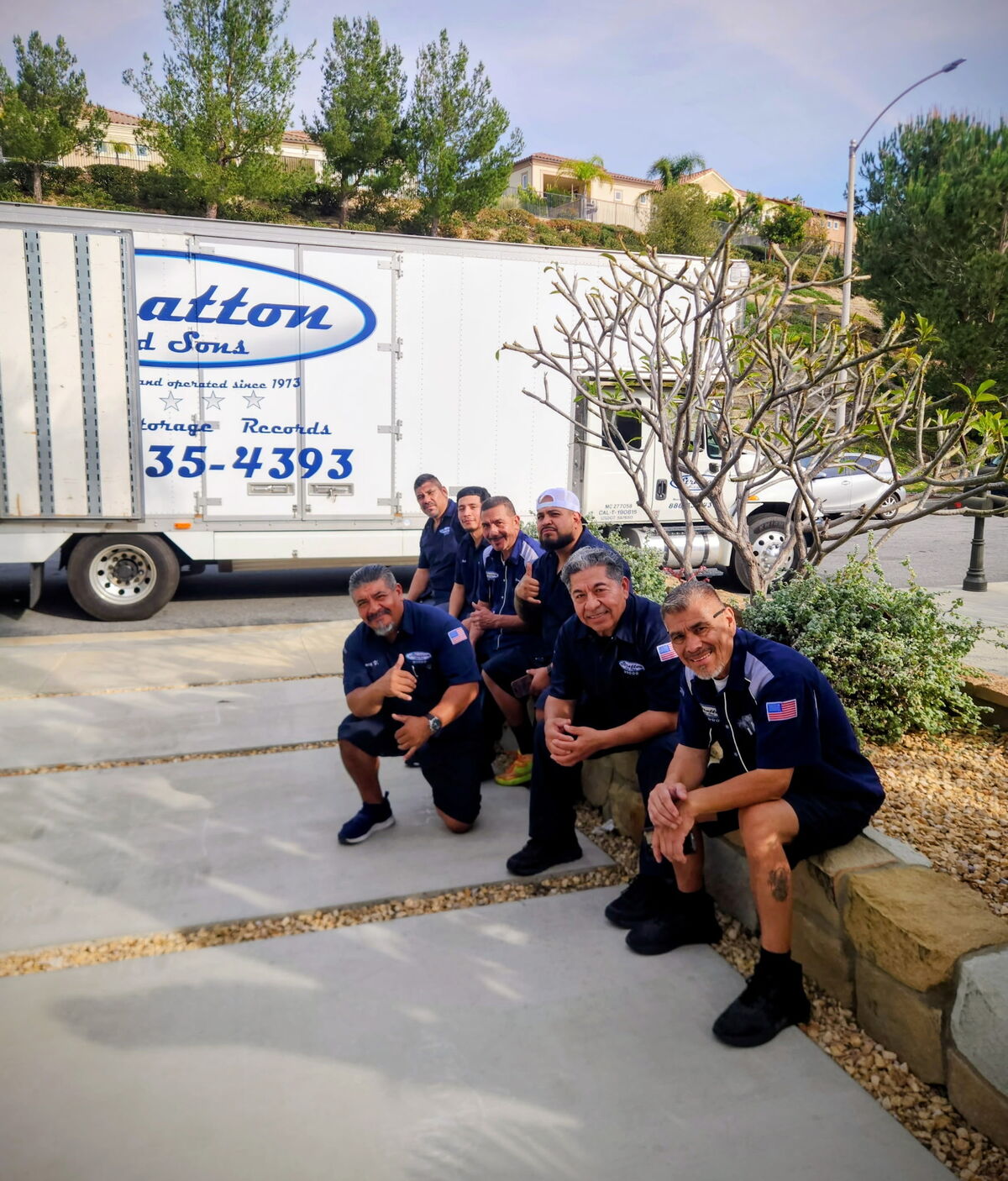
Moving out of California is a different job from moving across Los Angeles. The truck may be on the road for days, federal rules apply instead of state rules, and your belongings are out of your sight for most of the trip. The questions that matter change too: who actually drives the truck, whether your shipment shares space with someone else's, and what happens if your new home is not ready when the truck arrives.
Stratton and Sons has been a San Fernando Valley moving company since 1973 and is a licensed interstate carrier (US-DOT 567650, MC 277058). This guide walks through how a long-distance move actually works, from the first estimate to the last box, so you know what to expect and what to ask. We will not quote prices here, because the only number that means anything is a written estimate for your specific move.
Key takeaways
- Interstate moves are regulated by the federal government (FMCSA), so check that any mover you consider has an active US-DOT number and MC authority.
- Long-distance moves are usually priced on the weight or volume of your shipment and the distance, plus any extra services, which is different from how most local moves are priced.
- Ask whether your shipment travels on a dedicated truck or is combined with other customers' shipments. It affects timing, handling and transfers.
- Book early. Six to eight weeks ahead is a safe target, and more for summer, when demand for long-distance moves peaks.
- Basic carrier liability is limited and based on weight. Full-value protection is a separate option, so decide on coverage in writing before moving day.
- If your new home will not be ready on arrival, a mover with its own warehouse can hold your belongings until it is, without handing them to another company.
How a long-distance move differs from a local move
A local move is usually finished in a day. A crew loads your home, drives across town, and unloads the same afternoon. A long-distance move has the same loading and unloading, but between them sits a journey of hundreds or thousands of miles, a delivery date set days or weeks out, and federal paperwork that protects you along the way.
That middle stretch is where long-distance moves go right or wrong. Your belongings need to be packed and loaded to survive days of highway vibration, kept together rather than passed between trucks and warehouses, and carried by a company that is accountable for the whole trip, not just the first and last mile.
Licensing: check before you book
Any company that moves household goods across state lines must be registered with the Federal Motor Carrier Safety Administration (FMCSA). That means a US-DOT number and active interstate operating authority, usually shown as an MC number. You can look up any mover on the FMCSA website in a few minutes, and it is the single best way to screen out companies that should not be handling your move.
- Confirm the company's US-DOT and MC numbers are active and match the name on your estimate.
- Find out whether the company is the actual carrier or a broker. A broker sells your move and then hands it to a carrier you have not vetted.
- Your mover should give you the federal booklet "Your Rights and Responsibilities When You Move" before the move. It explains estimates, claims and your protections in plain language.
Our numbers, for reference
Stratton and Sons is a licensed interstate carrier: US-DOT 567650 and MC 277058. We are the carrier, not a broker, and our own employees handle your move.
How long-distance moves are estimated
Most local moves are priced by the hour. Long-distance moves are usually priced on how much you are shipping, measured by weight or volume, and how far it is going. Packing, crating, storage and access challenges such as long carries, stairs or a shuttle truck for a narrow street are priced on top of that.
Because the shipment size drives the price, an accurate estimate starts with a real look at what you own, either an in-home walkthrough or a detailed video survey. Under federal rules, interstate estimates come in a few forms, and it is worth knowing which one you are being given.
- A binding estimate sets the price for the services and inventory listed. If you add items or services, the estimate should be revised in writing.
- A non-binding estimate is an approximation. The final charge is based on the actual weight and services, so it can come in higher or lower.
- A binding not-to-exceed estimate caps the price for the listed inventory and services. If the actual shipment comes in lighter, you pay less.
Compare the inventory, not just the total
When you compare long-distance quotes, check that each one lists the same items and the same services. A low quote often leaves out the piano, the garage or the packing, and those charges appear later.
Dedicated truck or shared load?
Many national van lines combine several customers' shipments on one truck and make stops along the way. That can lower cost, but it often means a wider delivery window, more handling and, in some cases, transfers between trucks or warehouses.
At Stratton and Sons, most long-distance shipments travel on a dedicated truck: loaded at your home and driven directly to your destination. When a shipment may be combined with another, we tell you before you book and give you the choice. Whatever company you choose, ask this question directly and get the answer in writing.
A realistic timeline for an interstate move
- Eight weeks out: get written estimates from licensed carriers and confirm whether each one is a carrier or a broker.
- Six weeks out: book your mover and choose valuation coverage. Decide what to sell, donate or discard, because every item you leave behind is weight you do not pay to ship.
- Four weeks out: arrange anything at either end that the building or HOA requires, such as elevator reservations, loading dock times or a parking permit. These are the homeowner's responsibility, so start early.
- Two weeks out: confirm packing dates if you have added packing, set aside anything traveling with you, and plan for items movers cannot carry.
- Moving day: walk through the home with the crew lead, confirm what is going and what is staying, and keep your copy of the bill of lading.
- Delivery: walk through with the crew as items come off the truck and note any damage on the paperwork before the crew leaves.
Summer is the busiest season for long-distance moves, with families timing moves around the school year. If you are moving between June and August, book earlier than you think you need to.
Packing for a long trip
A box that survives a 20-minute local drive may not survive four days on the interstate. Long-distance packing has to account for sustained vibration, temperature changes inside the trailer and the weight of everything stacked around it.
- Furniture is pad-wrapped and secured so it cannot shift in the trailer. Fragile and high-value pieces may need custom crates.
- On a dedicated truck, your shipment is the only one on board, so nothing is mixed with other customers' belongings. Because of that, we do not create an item-by-item inventory for every shipment. If you would like one, ask when you book, and we will tell you whether it can be arranged for your move.
- Full or partial packing is available as an add-on. Packing some of the home yourself is one of the biggest levers you control over the cost.
- Keep important documents, jewelry, medication, laptops and anything irreplaceable with you rather than on the truck.
Know what movers cannot carry
Movers cannot transport hazardous materials such as propane tanks, gasoline, paint thinners, pool chemicals and aerosols. Many states also restrict bringing in plants. Plan to use up, give away or properly dispose of these before moving day.
Valuation coverage: what protects your belongings
Interstate movers must offer two levels of liability. Released value is the basic option. It is included at no extra charge, but it reimburses based on weight, which is a small fraction of what most furniture, electronics or art is worth. Full-value protection makes the mover responsible for repairing, replacing or paying the current value of a lost or damaged item, and it is priced separately.
Choose your level of coverage in writing before the move. If you have high-value pieces such as fine art, antiques or collections, list them and discuss how each one is valued. Dated photos and appraisals make any future claim far simpler.
When your new home is not ready yet
Closing dates slip, renovations run long, and leases do not always line up. When the truck is ready before the house is, your belongings need somewhere safe to wait.
Stratton and Sons operates its own warehouse in Chatsworth, so if you are leaving Los Angeles before your new home is ready, we can hold your belongings and then deliver them when you are. Your shipment stays in the care of the same company the whole time, with no hand-off to a separate storage company. Temperature-controlled space is available for specialty items.
Questions to ask any long-distance mover
- What are your US-DOT and MC numbers, and are you the carrier or a broker?
- Is this a binding, non-binding or binding not-to-exceed estimate?
- Will my shipment travel on a dedicated truck, or could it be combined with others?
- Are the people loading and driving my shipment your own employees?
- What delivery window will you commit to in writing?
- What valuation coverage options do you offer, and what does each one cover?
- If my new home is not ready, can you store my belongings, and where?
A reputable mover will answer every one of these clearly and put the answers in writing. If a company is vague on any of them, especially licensing or who actually handles your shipment, keep looking.
How Stratton & Sons can help
The services behind everything in this guide — handled by our own crews and crating shop.
Long Distance Moving
Licensed interstate moves to all 48 contiguous states, with most shipments on a dedicated truck.
Movers With Storage in Los Angeles
Our own Chatsworth warehouse holds your belongings if your new home is not ready yet.
Custom Crating & Shipping
Crates built in our Chatsworth workshop for fine art, antiques and fragile pieces traveling long distances.
Residential Moving
Careful, full-service home moves with packing available as an add-on.
Moving art, antiques, or a full collection?
Talk to a fourth-generation Los Angeles fine-art mover about crating, transport, and storage for your pieces. Free, no-obligation estimates.